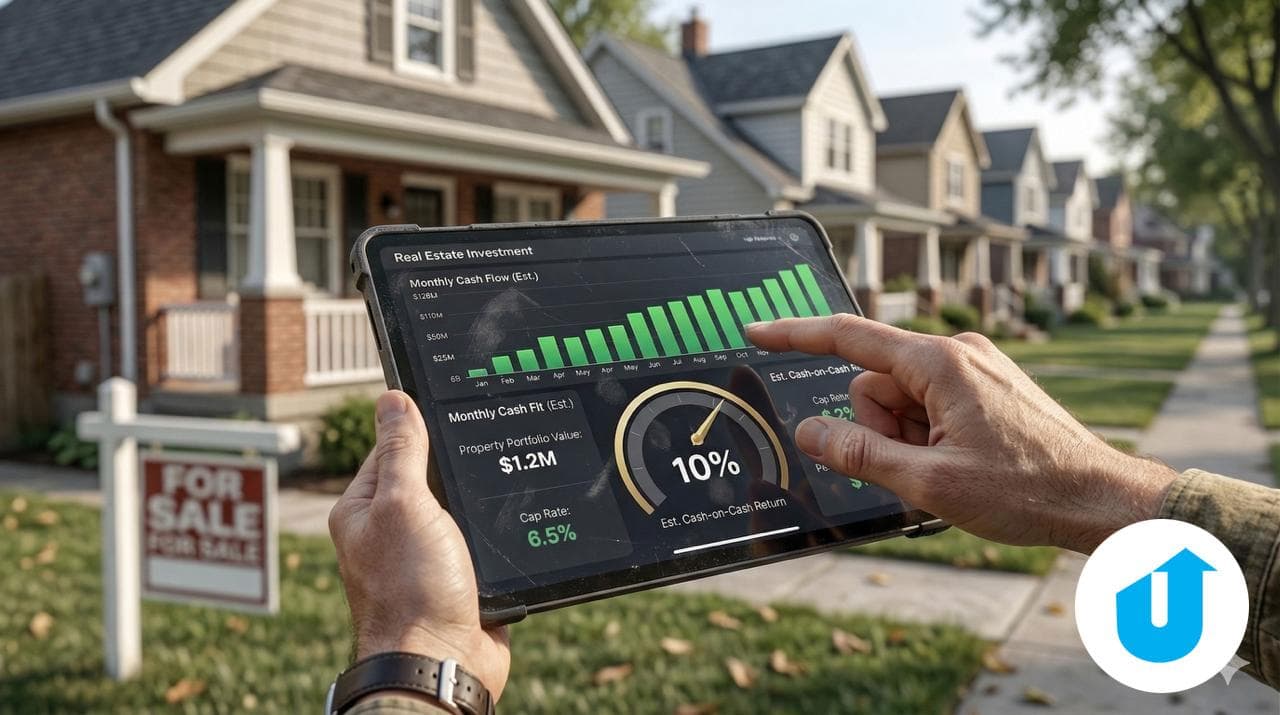
There are hundreds of rental property calculators online. Most of them are lying to you.
Not on purpose. They just skip the parts that matter.
You plug in a purchase price, estimated rent, and a few expenses. It spits out a cash-on-cash return. You feel smart. You make an offer. Six months later you're wondering why your "8% return" is actually closer to 2%.
Here's what went wrong.
The 3 Things Most Calculators Miss
1. They Let You Guess at Rent
The biggest input in any rental analysis is rent. And most calculators let you type in whatever number you want.
That's a problem. Because you're going to type in the optimistic number. Everyone does.
You'll look at one Zillow listing asking $1,800 and use that. You won't look at the five comparable units actually leasing at $1,550. You won't check if that $1,800 listing has been sitting for 45 days because it's overpriced.
A calculator that doesn't validate your rent assumptions against real market data isn't a calculator. It's a wish generator.
2. They Undercount Expenses
Here's the standard expense list in most online calculators:
- Mortgage payment
- Property taxes
- Insurance
- Maybe property management
Here's what's missing:
- Vacancy loss — Most markets run 5-8% vacancy. Some run higher. Zero vacancy is not a plan.
- Maintenance — 8-12% of gross rent, every year, no exceptions. Things break.
- CapEx reserves — The roof, HVAC, and water heater are all on a clock. You need to be saving for them monthly.
- Turnover costs — Every time a tenant leaves, you're looking at cleaning, minor repairs, lost rent during vacancy, and possibly a leasing fee.
- Actual insurance quotes — Not the $100/month placeholder you typed in.
I've seen calculators that show a 12% cash-on-cash return turn into a 4% return once you add the real expenses. That's not a rounding error. That's the difference between a good investment and a job that pays worse than Wendy's.
3. They Don't Stress-Test Anything
The question isn't "what's my return if everything goes perfectly?" The question is "what happens when it doesn't?"
What if rents drop 10%? What if you have two months of vacancy instead of one? What if that HVAC dies in year two instead of year five?
A calculator that gives you one number with no sensitivity analysis is giving you false confidence. You need to see the range of outcomes, not the best case.
What a Good Calculator Actually Does
A useful rental property analysis tool should:
- Pull real rental comps — not let you guess. If you're analyzing a 3BR in Phoenix, it should show you what 3BRs in that zip code are actually renting for.
- Force conservative assumptions — Default to realistic vacancy, maintenance, and CapEx numbers. Let you override them, but start honest.
- Run a stress test — Show you what happens if rents come in 10-15% below estimate. If the deal dies at -15%, the margins were never there.
- Give you a verdict — Not just a number. A clear signal: is this deal worth pursuing or not?
Most free calculators do none of this. They give you a form, a formula, and a false sense of security.
The Real Cost of a Bad Calculator
I'm not being dramatic. The wrong number at the wrong time leads to a bad purchase. A bad purchase in real estate isn't like a bad stock pick — you can't sell it tomorrow. You're stuck with a property that's bleeding cash every month, and unwinding it costs you closing costs, agent commissions, and months of stress.
The 20 minutes you save using a simple calculator can cost you tens of thousands. Ask anyone who bought a "cash-flowing" property that turned out to be cash-negative after real expenses.
A Better Way
We built UpsideHero because we were tired of running rental analyses on tools that let us lie to ourselves.
It walks you through three phases: define your investment thesis, validate against real market data, then run the full underwriting with a stress test built in. You get a go/no-go verdict, not just a spreadsheet.
Phase 1 is free. Try it on a property you're considering and see how the numbers hold up when you can't fudge them.